Cuba's Healthcare: The Showcase and the Evidence
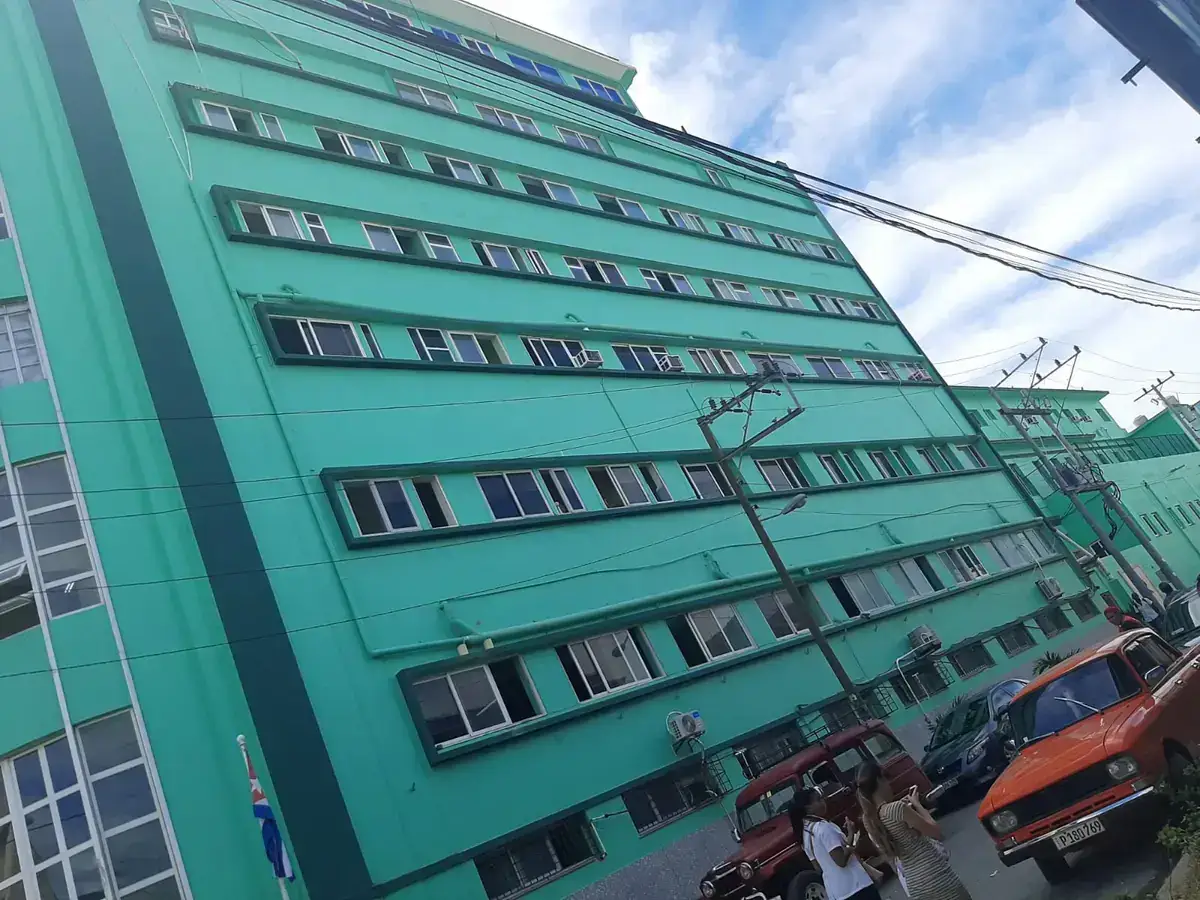
Free universal healthcare is the Cuban regime’s most celebrated achievement. Cuba has a very high concentration of doctors — about 0.8 percent of its population (Berdine, Geloso and Powell, 2018) — and before the pandemic its infant mortality rate stood at 4 to 5 deaths per 1,000 live births (UNICEF, 2026) — figures that have led Cuba to be described as a poor country with the social development of a rich one (Gonzalez, 2015). But the evidence shows that the statistics are less reliable than they appear, that the system serves the state’s purposes as much as patients’, and that it is now in deep crisis.
Can the statistics be trusted?
Infant mortality is the figure Cuba most often cites. Two studies have questioned it.
Roberto Gonzalez found a sharp discrepancy between Cuba’s reported late fetal deaths (stillbirths) and early neonatal deaths, and proposed a method to correct for it. His results indicate that Cuba’s true infant mortality rate may be double the reported figure — still lower than the Latin American average, but not comparable to developed countries (Gonzalez, 2015).
Gilbert Berdine, Vincent Geloso and Benjamin Powell reached a similar conclusion. In Cuba, they note, “physicians are given health outcome targets to meet or face penalties.” Cuba’s ratio of late fetal to early neonatal deaths was 6 — a clear outlier against 1.04 to 3.03 in other countries — which suggests that “Cuban doctors were re-categorizing neonatal deaths as late fetal deaths.” Correcting for this, they estimate infant mortality at 7.45 to 11.16 per 1,000 rather than the official 5.79. They also state that physicians perform abortions “without clear consent of the mother” when scans reveal abnormalities, and an ethnographic study describing the “forceful internment in a state clinic” of mothers whose behaviour threatened the targets (Berdine, Geloso and Powell).
Doctors as an export
Cuba sends tens of thousands of health workers abroad: about 30,000 were deployed in 2020, before some 1,500 more were sent to help with Covid-19. They work under Resolution 168 of 2010, which makes it a “disciplinary offense” to have “relationships” with people whose “actions are not consistent with the principles and values of the Cuban society,” requires doctors to report their romantic relationships to supervisors, and forbids them to speak to the media without authorization. Doctors who “abandon” a mission reportedly face a de facto eight-year ban on returning to Cuba, and the penal code allows up to eight years in prison for medical staff who “abandon” their jobs. In November 2019 UN special rapporteurs said the working conditions reported to them “could amount to forced labor” (Human Rights Watch, 2020).
A system in crisis
The system has failed before: in the economic collapse of the 1990s, malnutrition caused an epidemic of nerve disease (see Cuba’s Special Period). Today it is under strain again. UNICEF reported in January 2026 that:
- 68 percent of the products on Cuba’s essential medicines list had been affected by supply problems over the past year;
- shortages of drugs for childhood blood cancers had cut child survival from 75 to 60 percent;
- infant mortality had risen to 7.1 per 1,000 live births in 2024, against 4 to 5 before the pandemic, and low birthweight from 5.1 percent of births in 2017 to 7.6 percent in 2023;
- although social spending exceeded 40 percent of the state budget, investment in education, health and social assistance was less than 4 percent of total spending in 2022 (UNICEF).
Why it matters
Cuba’s healthcare has long been held up as the strongest argument for its revolution. But a health system judged by numbers that doctors are pressured to deliver, staffed by professionals whose personal lives abroad are policed by the state, and now short of most essential medicines is not the model it is claimed to be. The question is whether a one-party state that controls the statistics can be taken at its word.
Further reading on this site
- Cuba’s Special Period — when the economy collapsed and malnutrition spread.
- Leaving Cuba and Cuba’s exodus — the state’s control over who may leave.
- All articles on Cuba.
Sources
Primary sources
Scholarship
- Berdine, Gilbert; Geloso, Vincent; Powell, Benjamin. Cuban infant mortality and longevity: health care or repression? Health Policy and Planning 33, no. 6, 2018, pp. 755–757.
- Gonzalez, Roberto M. Infant Mortality in Cuba: Myth and Reality. Cuban Studies 43, 2015, pp. 19–39.
- Human Rights Watch. Cuba: Repressive Rules for Doctors Working Abroad. Human Rights Watch, 23 July 2020, 2020.