Introduction
The Romanian secret police, known as the Securitate, was one of the most brutal and repressive intelligence agencies in the Eastern Bloc during the Cold War era. From 1948 until the Romanian Revolution in 1989, the Securitate engaged in widespread surveillance, intimidation, torture, and assassination to prop up Romania’s communist regime and suppress political dissent. This article examines the history, operations, and legacy of the Securitate.
Establishment of the Securitate
The Securitate was established in 1948 with help from the Soviet NKVD secret police shortly after communists seized power in Romania. The NKVD closely advised the Securitate in its early years, providing training in surveillance and interrogation techniques. The first Securitate head, Gheorghe Pintilie, was a Soviet agent. By 1951, the Securitate’s ranks had swelled to almost 60,000 as it ruthlessly targeted potential opponents of the new regime.
In the 1950s, General Secretary Gheorghe Gheorghiu-Dej wielded the Securitate to eliminate rivals and consolidate his power. This included arresting and executing former comrades like Lucrețiu Pătrășcanu who were threats to Dej’s leadership. The Securitate also helped forcibly collectivize agriculture by arresting farmers who resisted and deporting thousands to the Danube Delta. Torture extracted false confessions for show trials of “class enemies.” [1]
Expansion Under Ceaușescu
The power and reach of the Securitate greatly expanded under Nicolae Ceaușescu, who became leader in 1965 after Gheorghiu-Dej’s death. By the 1980s, the Securitate had ballooned to an estimated 100,000 agents and informants, giving it one of the highest per-capita rates in the Eastern Bloc. [2] Up to 1 in 30 Romanians spied for the Securitate on their countrymen. Ceaușescu’s “cult of personality” and “dynastic socialism” required pervasive surveillance and control to suppress dissent.
Ceaușescu’s Securitate was structured into six main directorates:
- Directorate I: Domestic intelligence and internal security
- Directorate II: Economic counter-sabotage and counter-espionage
- Directorate III: Counter-espionage against foreign spies
- Directorate IV: Military counter-intelligence
- Directorate V: Guarding party leadership and government facilities
- Directorate VI: Political police and penal investigations
Directorate I was the largest, with agents and informants keeping tabs on everyday citizens. Directorate VI brutally repressed dissidents. Directorates III and IV aimed to prevent foreign subversion. [3]
Surveillance State
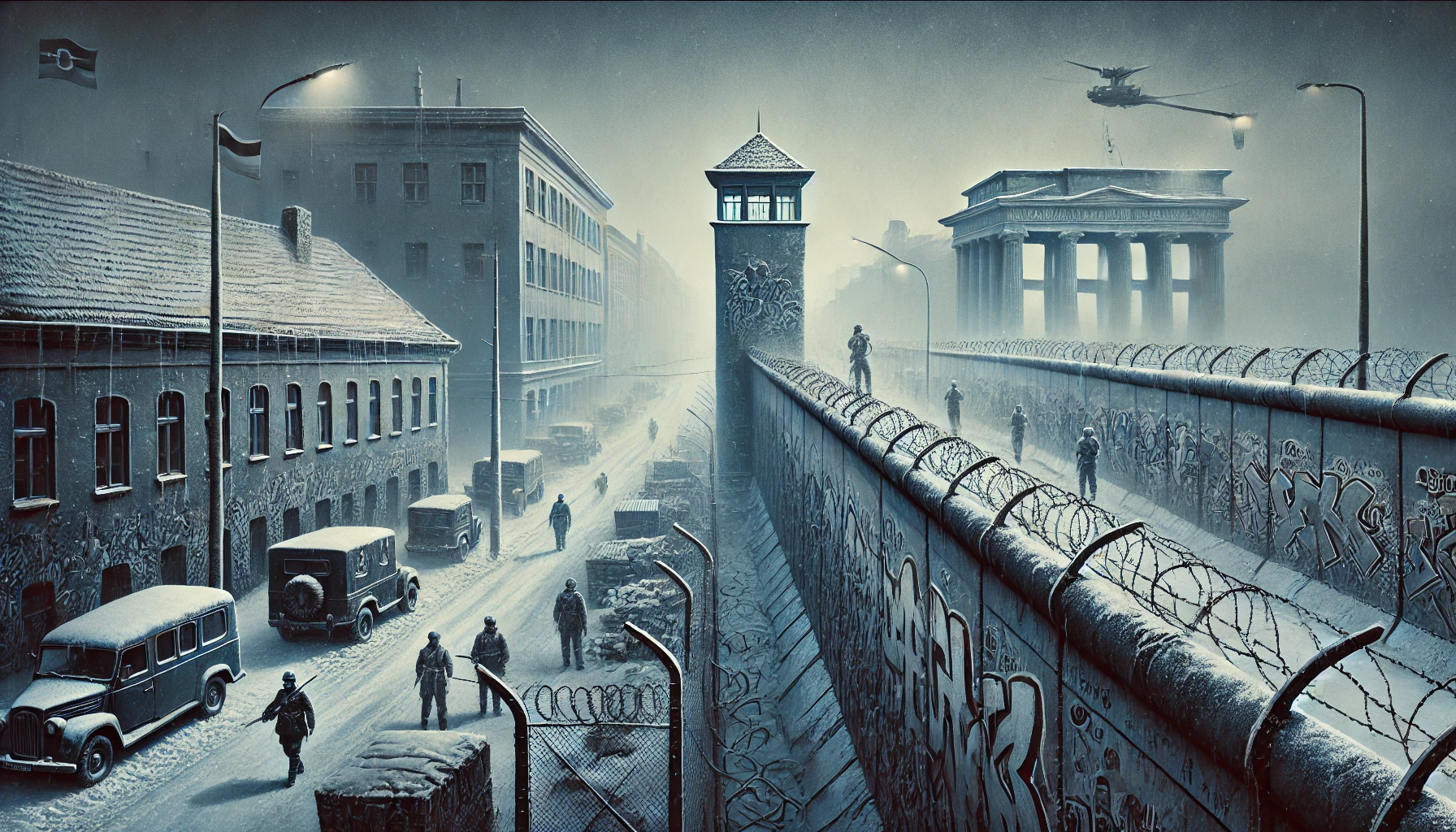
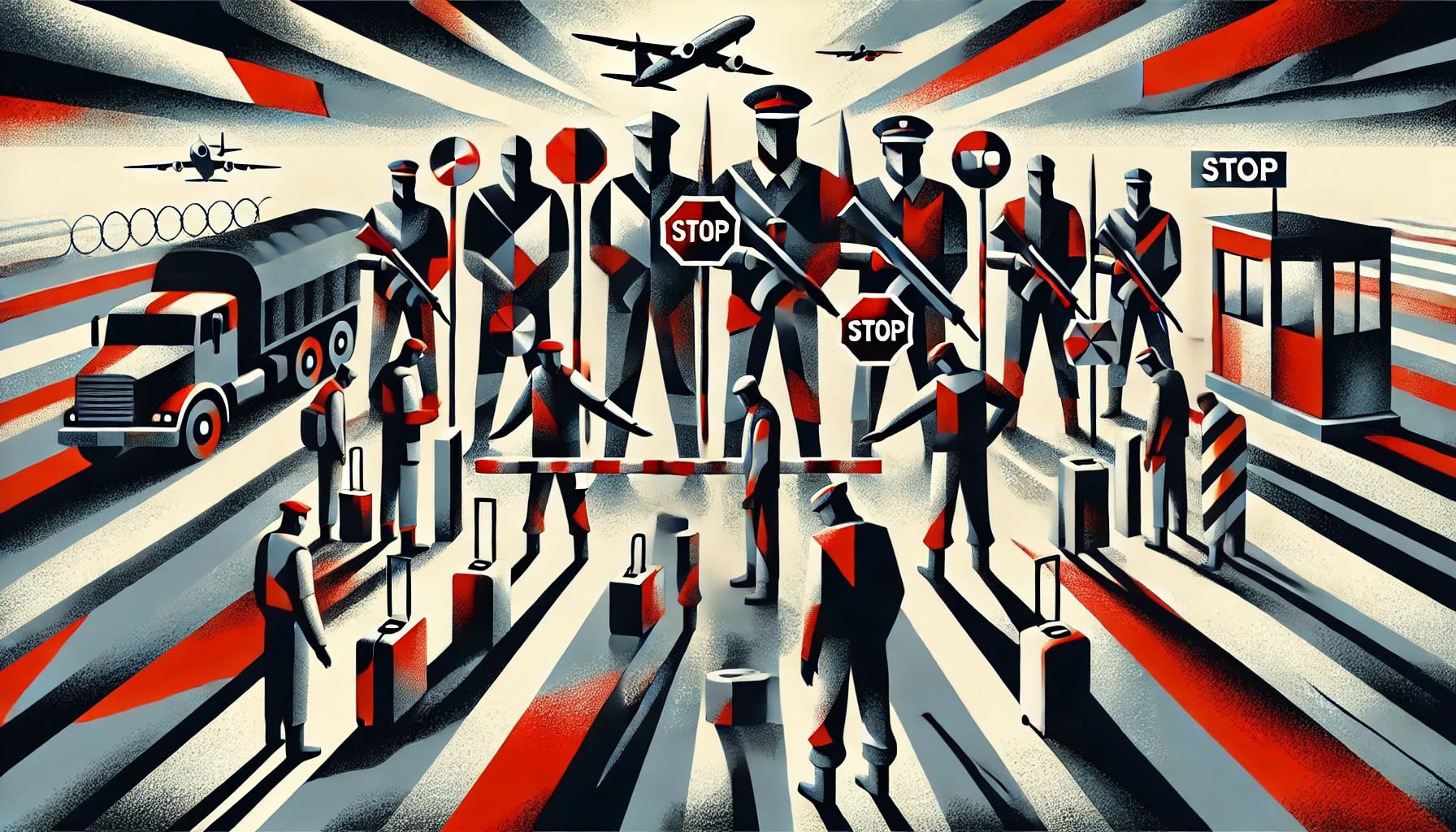
Romania under Ceaușescu became a dystopian surveillance state. The Securitate tapped phones, intercepted mail, bugged apartments, and infiltrated underground groups. Typewriters had to be registered so the Securitate could trace dissident writings. Informants were everywhere, even in the ranks of the Orthodox Church. [4]
The Securitate kept meticulous files on a huge number of citizens. By 1989, an estimated 700,000 Romanians had Securitate files. [5] Reasons for being targeted could be as minor as telling a political joke or having foreign contacts. Blackmail was used to coerce informants. The constant threat of being informed on created a climate of self-censorship and paranoia.
Targeting Dissidents
The Securitate ruthlessly suppressed anyone who dared challenge Ceaușescu’s rule. Dissidents, union leaders, religious believers, and ethnic minorities were arrested, interrogated, beaten, and worse. Torture was systematic, including electric shocks, severe beatings, sleep deprivation, and rape. [6] Prisoners were humiliated, threatened, and coerced to inform on others. Deaths from torture were common. Dumitru Moldovan recounted having his fingernails ripped out.
Writer Paul Goma was arrested and tortured for speaking out. He later said: “It was not only what they did to me physically, but what they did to me mentally. It was much worse. We were turned into different people, what they did – it was monstruous.” [7]
Dissidents were also subjected to “Zersetzung”, or decomposition – psychological warfare tactics to disrupt their lives. This included breaking into homes, sabotaging appliances, spreading slanderous rumors, demotions at work, and severing social ties. The goal was to destroy dissidents mentally and isolate them. [8]
The Pitești Experiment
One of the most infamous chapters in Securitate history was the Pitești Experiment. From 1949-1952 at Pitești Prison, the Securitate sought to completely break and “reeducate” prisoners through torture and humiliation. Detainees were forced to torture each other and engage in perverse acts like eating feces. The aim was to shatter their identities and remake them as hollowed-out servants of the state.
Eugen Țurcanu, a prisoner himself, became the top torturer before he was executed in 1954. Estimates of those killed range from dozens to thousands. [9] The experiment spread to other prisons before being abandoned, but it left deep scars. “The main purpose was to destroy our personality and to kill our souls,” said one survivor. [10]
Assassinations Abroad
The Securitate didn’t just target dissidents inside Romania. It hunted them abroad too. Critic Matei Pavel Haiducu, living in France, barely survived a Securitate assassin who pumped three bullets into him in 1981. [11] Others weren’t so lucky.
In 1978, dissident journalist Vlad Georgescu died of radiation poisoning in Munich, likely from a Securitate operative. A year later in London, cartoonist Nicu Stănescu fell from his apartment balcony to his death under suspicious circumstances. Securitate defector Ion Mihai Pacepa said in 1987 that the agency was running kidnappings and assassinations worldwide to silence critics. [12]
Romanian Revolution
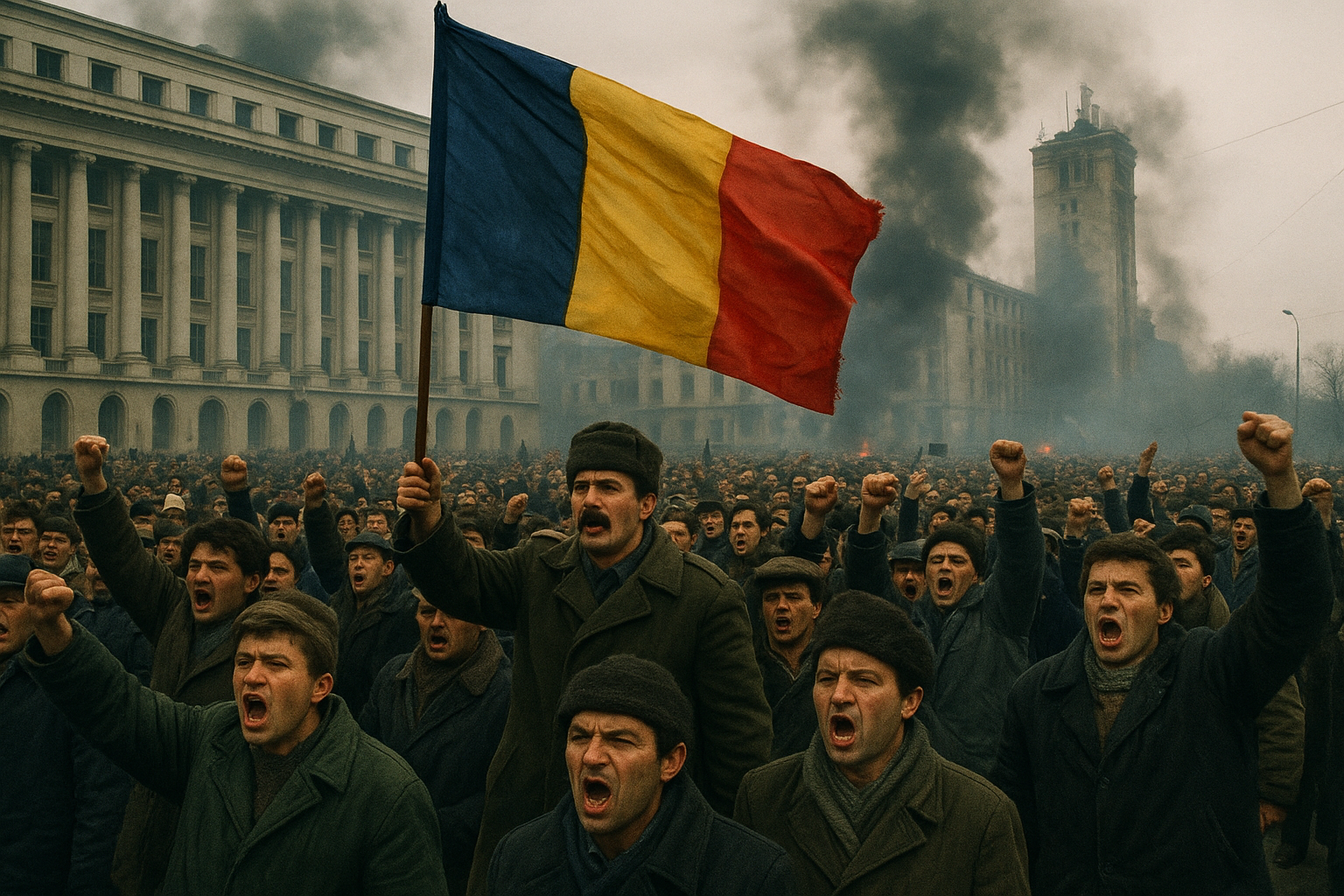
The Securitate was the prime instrument defending Ceaușescu’s rule until the very end. When anti-government protests erupted in Timișoara in December 1989, Securitate and army forces opened fire, killing and wounding hundreds. As the uprising spread, Ceaușescu and his wife Elena tried to flee by helicopter but were captured and summarily executed on Christmas Day 1989.
In the tumultuous aftermath, protesters stormed Securitate offices looking for secret files. Some Securitate men tried to destroy records. Others fought protesters, leading to thousands of deaths. [13] But the feared secret police apparatus had collapsed along with the regime and many of its leaders would eventually face justice.
Legacy of the Securitate
The crimes of the Securitate left lasting scars on Romanian society. Files reveal the extent of its murderous persecution. In 2006, a presidential commission concluded the Securitate was guilty of “vast crimes against humanity.” [14] Trials of top ex-Securitate officials have resulted in a few prison sentences.
Access to the secret files is still politically sensitive. In 1999, a National Council for the Study of the Securitate Archives was created, but intelligence services control access. As of 2020, about 3 million Securitate files are yet to be published, while other incriminating evidence has been destroyed. [15]
Romania is still grappling with its communist past and the role of those who served in the machinery of repression. The Securitate was Ceaușescu’s unforgiving instrument of Stalinist terror, controlling all aspects of life. Its far-reaching crimes were in service of a criminal totalitarian regime that Romania is still coming to terms with.
References
- Stalinism for Sale: The Privatization of Romania, 1990-2004
- Ceausescu and the Securitate: Coercion and Dissent in Romania, 1965-1989
- Red Horizons: The True Story of Nicolae and Elena Ceausescus’ Crimes, Lifestyle, and Corruption
- The East Came West: Muslim, Hindu, and Buddhist Volunteers in the German Armed Forces, 1941-1945
- Secrets of the Securitate Files
- Etica torturilor revizuite
- National Ideology Under Socialism: Identity and Cultural Politics in Ceausescu’s Romania
- Enemies of the People: The Destructive Impact of Surveillance on Family, Neighborhoods, and Communities
- The Pitesti Phenomenon: Brainwashing techniques in communist prisons
- El Experimento Pitesti (Spanish Edition)
- Red Horizons: The True Story of Nicolae and Elena Ceausescus’ Crimes, Lifestyle, and Corruption
- Assassination and Political Violence: A Comparative Study of Historical Cases
- The Romanian Revolution of December 1989