Faith Under the Party: Religion in Communist China
The People’s Republic of China is officially an atheist state. It recognizes five religions — Buddhism, Catholicism, Islam, Protestantism and Taoism — and regulates each through a state-controlled religious organization (USCIRF). Believers who accept the Party’s control may worship within its limits. Those who do not — and whole communities the Party regards as threats — have faced persecution that, in Xinjiang, a United Nations assessment found “may constitute international crimes, in particular crimes against humanity” (OHCHR, 2022).
The Cultural Revolution: a pastor’s death
Believers were among the victims of the Cultural Revolution (1966–1976). One case is especially well documented. Wang Zhiming was a pastor among the Christians of Wuding County in Yunnan province. He was arrested in May 1969 together with members of his family, condemned to death four years later, and executed on 29 December 1973 at a mass rally of more than 10,000 people. His wife was imprisoned for three years and two of his sons for nine; a third son reportedly took his own life in detention (Westminster Abbey).
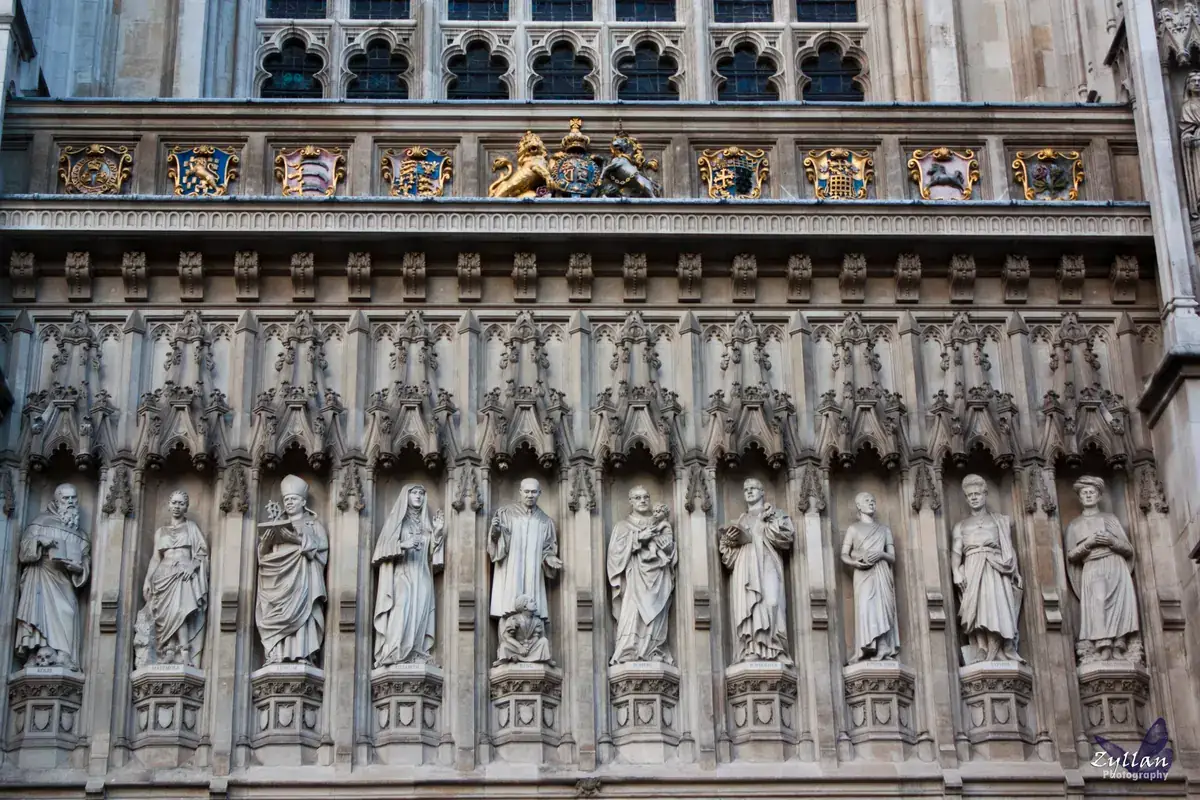
In October 1980 Party officials “rehabilitated” him and offered his family compensation. A memorial was built in Wuding in 1981 — the only monument known to commemorate a Christian killed in the Cultural Revolution. In 1998 his statue was unveiled above the west door of Westminster Abbey in London, among ten martyrs of the twentieth century (Westminster Abbey).
“Sinicization”: religion loyal to the Party
Under Xi Jinping the Party has pressed a policy of “sinicization of religion”, which, the U.S. Commission on International Religious Freedom reports, “requires the complete loyalty and subordination of recognized religious groups to the CCP, its political ideology, and its policy agenda.” In its 2025 report the Commission found that religious freedom conditions in China in 2024 “remained among the worst in the world.” Among its findings (USCIRF):
- Christians. Underground Catholic clergy who refused to join the state-controlled Catholic organization were detained or disappeared. Protestant house churches that refused to join the state-controlled Protestant body were raided, and their members fined and imprisoned; in January 2024 Pastor Kan Xiaoyong was sentenced to 14 years.
- Tibetan Buddhists. Authorities reportedly banned the admission of new monks at a monastery in Chamdo, closed Tibetan monastery schools and sent the children to state boarding schools, and arrested Tibetans for mentioning the Dalai Lama.
- Hui Muslims. Mosques were “sinicized” by replacing domes and minarets with Chinese-style architecture.
- Minors. China continued to forbid children from taking part in religious activities or receiving religious education.
- Falun Gong and others. Falun Gong practitioners, the Church of Almighty God and other unrecognized groups were targeted as illegal “cults”, with thousands arrested or imprisoned.
Xinjiang
The heaviest repression has fallen on the Uyghurs and other predominantly Muslim peoples of Xinjiang. In August 2022 the Office of the UN High Commissioner for Human Rights concluded that “serious human rights violations have been committed” there in the name of counter-terrorism and countering “extremism”. China’s anti-terrorism laws, it found, contain vague concepts that “led to the large-scale arbitrary deprivation of liberty of members of Uyghur and other predominantly Muslim communities” in so-called vocational education and training centres “at least between 2017 and 2019.” Allegations of torture, ill-treatment and sexual violence in those facilities were “credible.” The assessment also found “undue restrictions on religious identity and expression” — Chinese regulations treat matters such as “irregular beards” as signs of extremism — and concluded that the detentions “may constitute international crimes, in particular crimes against humanity” (OHCHR, paras. 143–148).
The repression continues. In 2024, according to the U.S. Commission, authorities kept imprisoning Uyghurs for religious activity, including charitable giving and religious instruction; a 96-year-old imam, Abidin Damollam, died in prison while serving a nine-year sentence for “promoting religious extremism.” Xinjiang’s Party secretary called the sinicization of Islam an “inevitable trend” (USCIRF).
Why it matters
A Marxist-Leninist party that claims to possess the truth about history and society cannot accept a rival source of authority over conscience. China’s approach has changed in method — from the mass rallies of the Cultural Revolution to surveillance cameras outside places of worship and five-year “sinicization” plans — but not in principle. Faith is permitted only as far as it serves the Party. Those who put God, the Dalai Lama or the Quran above it still go to prison.
Further reading on this site
- Romania’s war on faith — another communist state’s campaign against the churches.
- The Hundred Flowers Campaign — how the Party punished those who took it at its word.
- Mao Zedong Thought and its evolution — the ideology behind the campaigns.
- All articles on China and on religion under communism.
Sources
Primary sources
- Office of the UN High Commissioner for Human Rights. OHCHR Assessment of human rights concerns in the Xinjiang Uyghur Autonomous Region, People's Republic of China. United Nations, 31 August 2022, 2022. — Conclusions, paras. 143–148
- U.S. Commission on International Religious Freedom. Annual Report 2025: China. USCIRF, 2025, 2025.