China's Hukou System: How the Party Tied Peasants to the Land
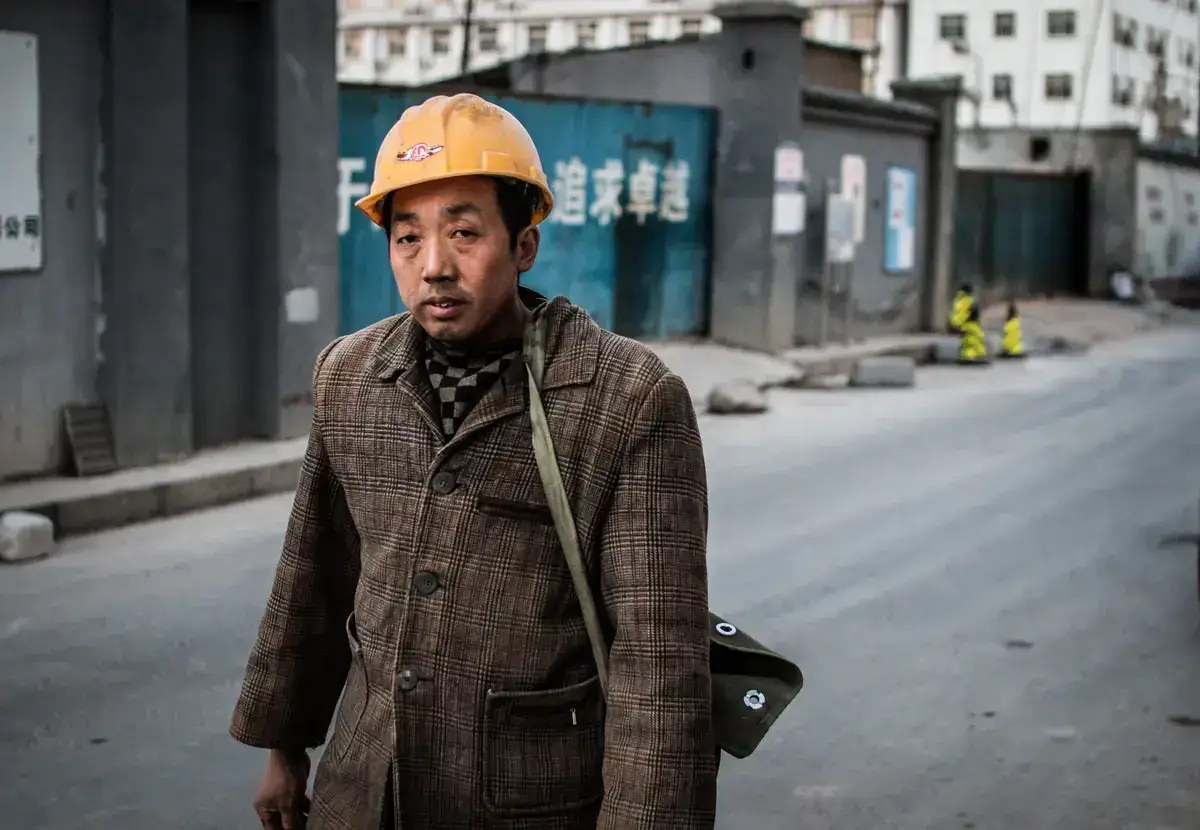
In January 1958 the People’s Republic of China promulgated a Household Registration Regulation that took away one of its citizens’ basic rights: the freedom to choose where to live. That freedom had been written into China’s founding documents of 1949 and its 1954 Constitution (Chan, 2009). The hukou system it codified divided the population into two hereditary castes — a privileged urban minority and a rural majority bound to the land — and it has shaped the lives of hundreds of millions of people ever since.
A Soviet model
The hukou was not a Chinese invention. The geographer Kam Wing Chan, a noted authority on Chinese urbanization, traces it, like Vietnam’s ho khau and North Korea’s hoju, to the propiska internal-passport system of the Soviet Union, on which the later communist states modelled their economies. Of the Soviet system, two scholars observed that “rather than the land belonging to the peasants, the peasants belonged to the land” (quoted in Chan).
Its purpose was economic. To force through a Stalinist “Big Push” of heavy industry, the Party extracted resources from the countryside by paying peasants low, state-dictated prices for their grain. As peasants fled to the cities in the mid-1950s — official documents derided them as aimless, “blind” migrants — the state began checking travel papers at railway stations. The 1958 regulation completed the system: every move required approval from the authorities at the destination. It worked together with compulsory state grain procurement and the people’s communes as a “trinity” of coercive tools for squeezing the countryside. One estimate puts the value extracted from the rural sector in the Mao era at 800 billion yuan (Chan).
Two castes
Every Chinese citizen was classified as having “agricultural” or “non-agricultural” hukou, inherited from the mother. Non-agricultural status brought state-provided housing, employment, rationed grain, education and medical care. The roughly 85 percent of the population with agricultural hukou had no claim on these: they were expected to fend for themselves and produce cheap grain for industry. “Given the immutable, hereditary nature of the hukou classifications,” Chan writes, “the peasantry de facto became an underclass” (Chan).
Changing status was nearly impossible. The annual quota for converting rural hukou to urban was set at 0.15 to 0.2 percent of the urban population, granted mainly to those recruited by state enterprises or universities, promoted to official posts or joining the army; people convicted of certain crimes could be stripped of urban status. So tight was the control that between 1958 and 1978, despite rapid industrialization, the urban-hukou share of the population actually fell, from 18.5 to 15.8 percent (Chan).
Chan points out that freedom of movement matters not only for a person’s well-being but because it gives citizens power “to rein in the tyranny of a rogue state by threat of exit.” The hukou removed that power (Chan).
Migrants without rights
After Mao’s death the state began to let peasants work in the cities — but not to belong there. From 1985 people could register as “temporary” residents, without local hukou or the rights that came with it. By the 1990s rural migrants had become the backbone of China’s export industry: 70 to 80 percent of the workforce in export cities such as Shenzhen and Dongguan, where about 7 million of 8 million residents in 2005 lacked a Shenzhen hukou. Migrants were paid less than local workers, often had their wages withheld for months, and were excluded from urban welfare — “a huge class of super-exploitable, yet highly mobile or flexible industrial workers,” in Chan’s words. Each Lunar New Year, migrants separated from their families for the rest of the year make what has been called the world’s greatest annual human migration (Chan).
The scale is now enormous. In 2024 China counted 299.73 million migrant workers (Xinhua/NBS). The 2020 census found 71 million migrant children and 67 million children “left behind” in their place of registration while one or both parents worked elsewhere — together 138 million children, nearly half of all children in China (NBS, UNICEF and UNFPA).
Reform without abolition
In July 2014 the State Council announced a reform aimed at “establishing a unified urban-rural household registration system,” putting a residence-permit system into full operation and helping some 100 million rural migrants and other urban residents obtain urban hukou (State Council Information Office, 2014). The reform keeps the principle intact: the state still decides who may become a full resident of which city. Chan noted in 2009 that the system “remains potent and alive,” and that, unlike many other instruments of the command economy, it had not been discarded (Chan).
Why it matters
The hukou shows how a communist state treats its citizens as resources to be allocated. For two decades it held the rural majority in place to feed a plan; for the next four it has supplied cities with workers who can be used without being granted the rights of residents. A Chinese scholar quoted by Chan called it “the door guard of the command economy.” Its persistence after the command economy itself was abandoned shows that its real function was never only economic: it was control.
Further reading on this site
- The Great Chinese Famine — what the Party’s extraction from the countryside cost in the Mao era.
- Leaving Cuba and the East German border — other communist states’ controls on movement.
- Faith under the Party — religion in communist China.
- All articles on China and on freedom of movement.
Sources
Primary sources
- State Council Information Office. Press conference on the State Council's guideline on reform of China's household registration system, 30 July 2014. National Health Commission of the PRC (transcript), 2014.
- Xinhua. China's migrant workers see steady income rise in 2024. gov.cn, 30 April 2025, 2025. — Reporting the National Bureau of Statistics migrant worker survey